
Jess on set with instructor Jane Kim and videographer Karen Rodriguez. Photo credit: Shayna Muller
Philosophy
My highest priority is helping a student gain skills to meet a practical need.
-
create assessments that replicate what the learner wants or needs to be able to do
speak plainly without sacrificing nuance or complexity
remove non-essential content (or make it optional)
Inspired by Bloom and Fink—and my instructors in the Learning Design and Technology Program at Harvard Extension School—I created my own taxonomy of learning. What started as a seastar grew and become a seastar and a rock, and a whole intertidal area.

The rock represents the instructor and the content they create for a self-paced, online course. The instructor needs to build a firm structure for learning before the learner arrives, since there will be no opportunity for synchronous interaction. The seastar is the learner, who has autonomy to engage with the content as they see fit, and can disengage at any time. The waves are the pressures of the world outside the class—both a potential distraction and an opportunity to practice what was learned.
-
The rock is a solid, humble base for online self-paced learning.
Sincerity is the base of the rock. Authentically wanting to guide the learner should be an instructor’s primary goal. This doesn't mean that you shouldn’t be compensated for you work—of course you should be. But it does mean speaking to the learner as though they are a fellow human, because they are.
From that sincere base we can build the foundational knowledge that will be needed for the application that the learner is striving for. But, these can be interspersed—the tide may come in at any time, and we need to be ready to use what we learn!
Beauty is the last component. This involves both aesthetics and also, hopefully ideas—concepts that land in a powerful way. However, flash at the expense of depth and rigor is the opposite of what we are looking for here. A simple, clean approach that makes clear what is most important is beautiful.
-
As educators, we hope to cultivate certain things in the learner ,but motivation is something that is largely going to come from the learner—we are responsible for not killing it! Try to avoid tasks that don’t contribute to the learners’ goals, edit down that overly long video, and continue to give reasons to keep progressing.
It can be hard to foster a sense of connection when can’t actually interact with your learner, but tone is key here—writing in an approachable way and being warm and at ease on camera.
Hopefully we are able to provide sparks inspiration to keep exploring and applying in new ways, to hopefully keep the learner going with the topic beyond the course. And, we want the learner to go out into that world with conviction, confident in the abilities that they gained during their time with our content.
Is this whole metaphor a little silly? YES. But it is authentically, sincerely, me.
Never lose your sense of humor, and never forget that your learners have a sense of humor, too.
Projects
I’m Humming Out
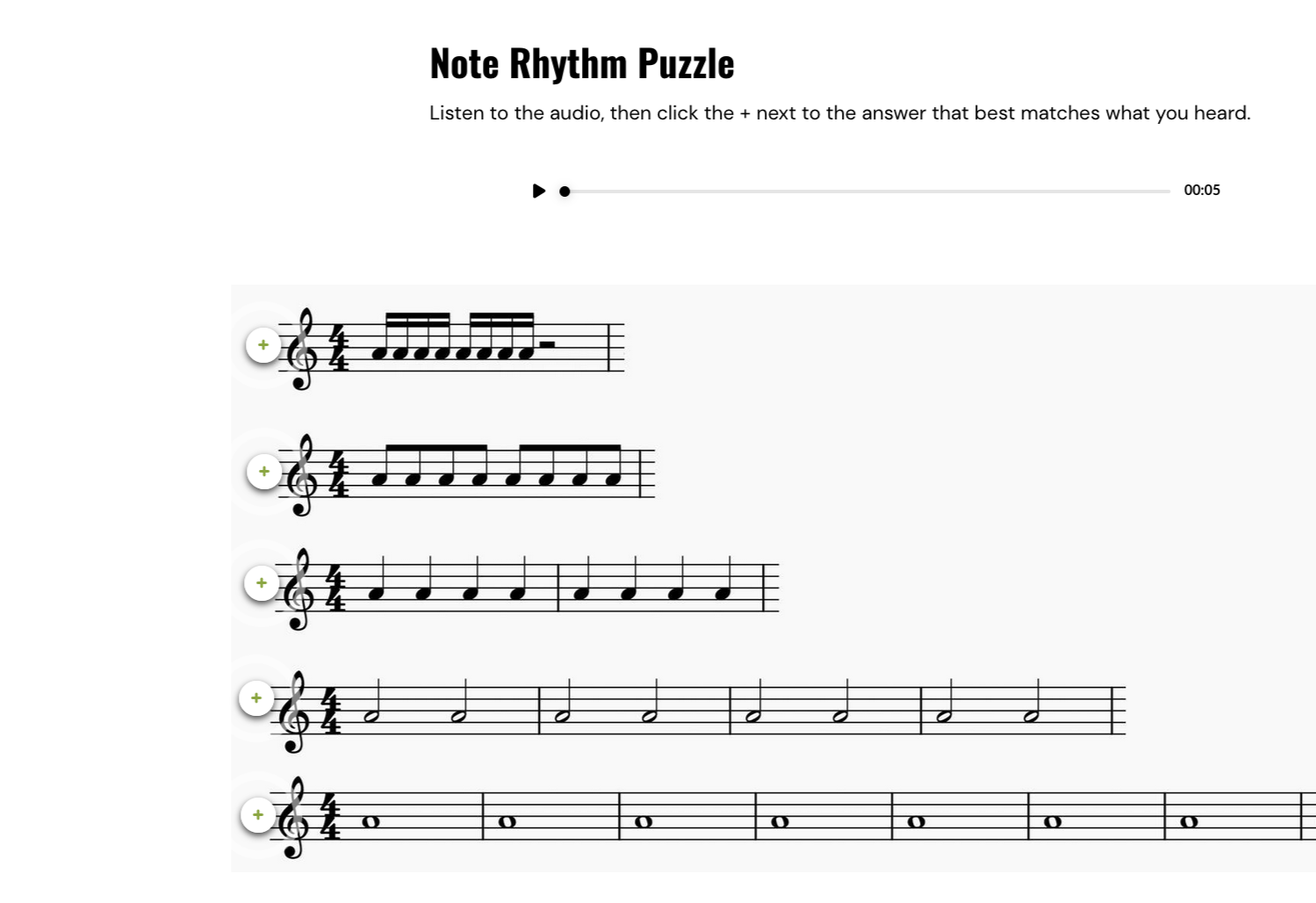

I’m Humming Out is a self-paced, online course in Articulate Rise that teaches the basic skills needed to start arranging music for a cappella.
My a cappella group, the Kinsey Scales, only performs arrangements created by current and former members. We strive to highlight queer artists and artists of other marginalized identities, and arranging our own music is a great way to lift up songs that may be less known. But, most members who join the group don’t have a background in composing or arranging.

The Kinsey Scales perform at Somerville Porchfest 2025. Image credit: Angela Song
The learners in this class will likely have a baseline of musical knowledge, since they are all singers. Being able to interpret musical notation is a prerequisite for this course, but it can be a big jump in skill to transcribe that notation yourself.
I created opportunities for scaffolding, by splitting up different skills like differentiating rhythms and pitches before asking learners to do both at the same time. The course culminates in an assessment involving transcribing an original song. Rather than source an existing song, I created a song that would be approachable but challenging to transcribe.
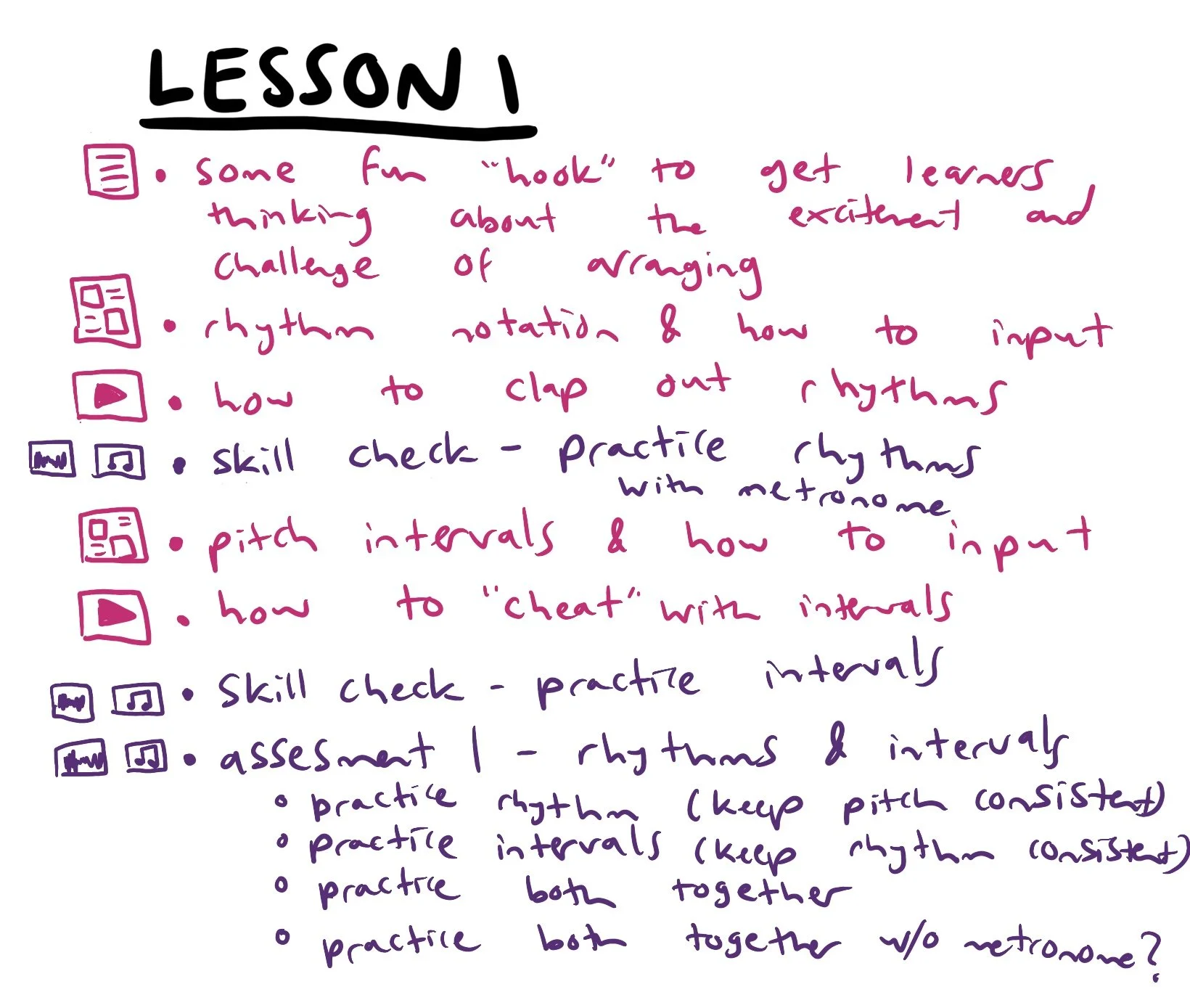
A lesson plan for I’m Humming Out
Morphogram
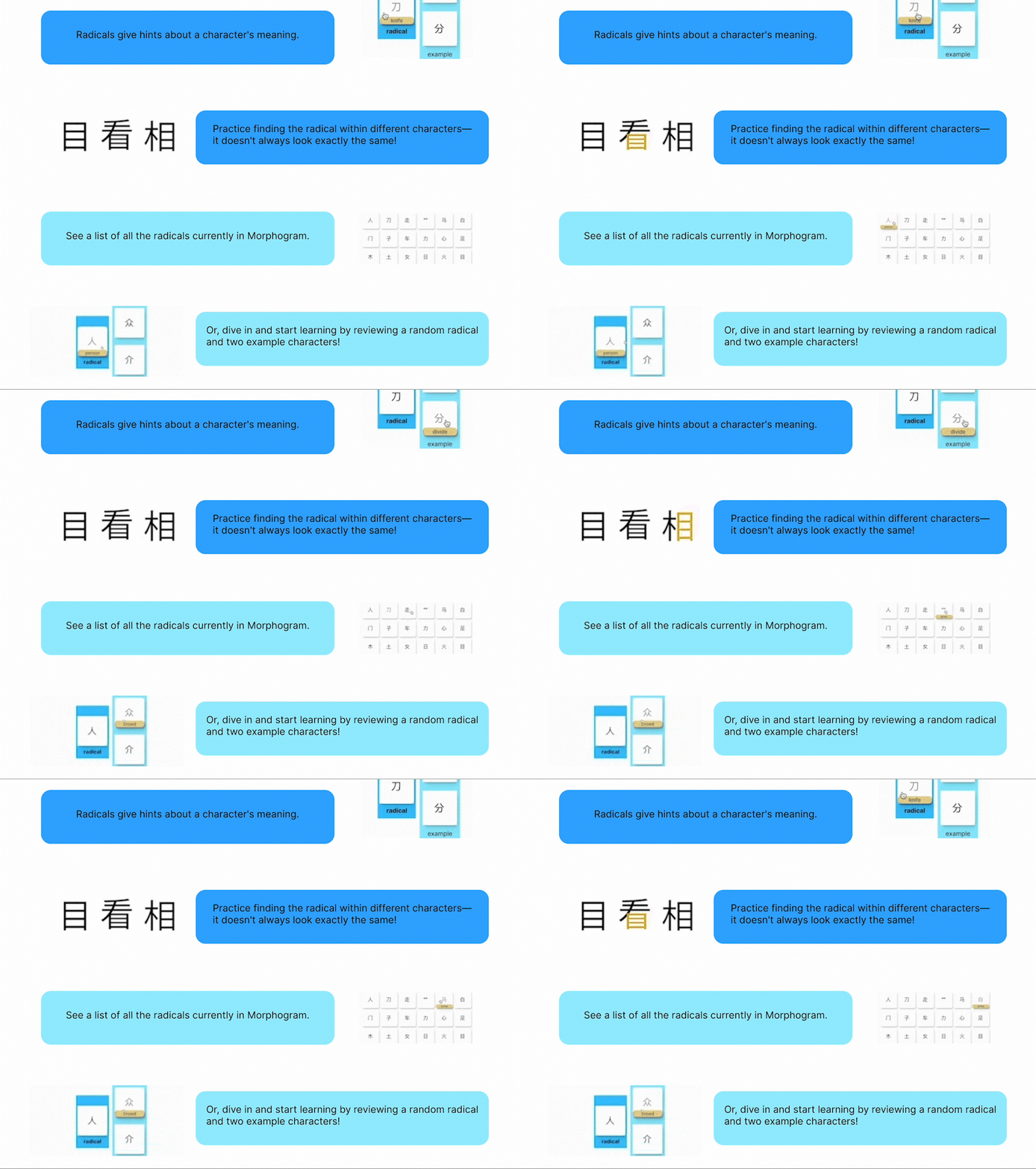
My app Morphogram tries to solve for a need I had—trying to learn how to read Chinese characters! I have been studying Chinese for a couple of years in an attempt to better communicate with my in-laws. I can (just barely) pick up bits of conversation around the dinner table now, but I’m absolutely useless trying to read a sign in Chinatown.
My Chinese teacher encouraged me to learn radicals as a gateway to understanding. Radicals are parts of a character that have semantic meaning—so for example, the radical for “fire” can be found in both the character for “light” and the character for “burn.”
I made a prototype for a dialect-agnostic app that would allow other learners like me to start making headway into unpacking Chinese characters.